
LAYING THE FOUNDATIONS: UNLOCKING 3D-PRINTED HOUSING REQUIRES MORE THAN JUST THE TECHNOLOGY
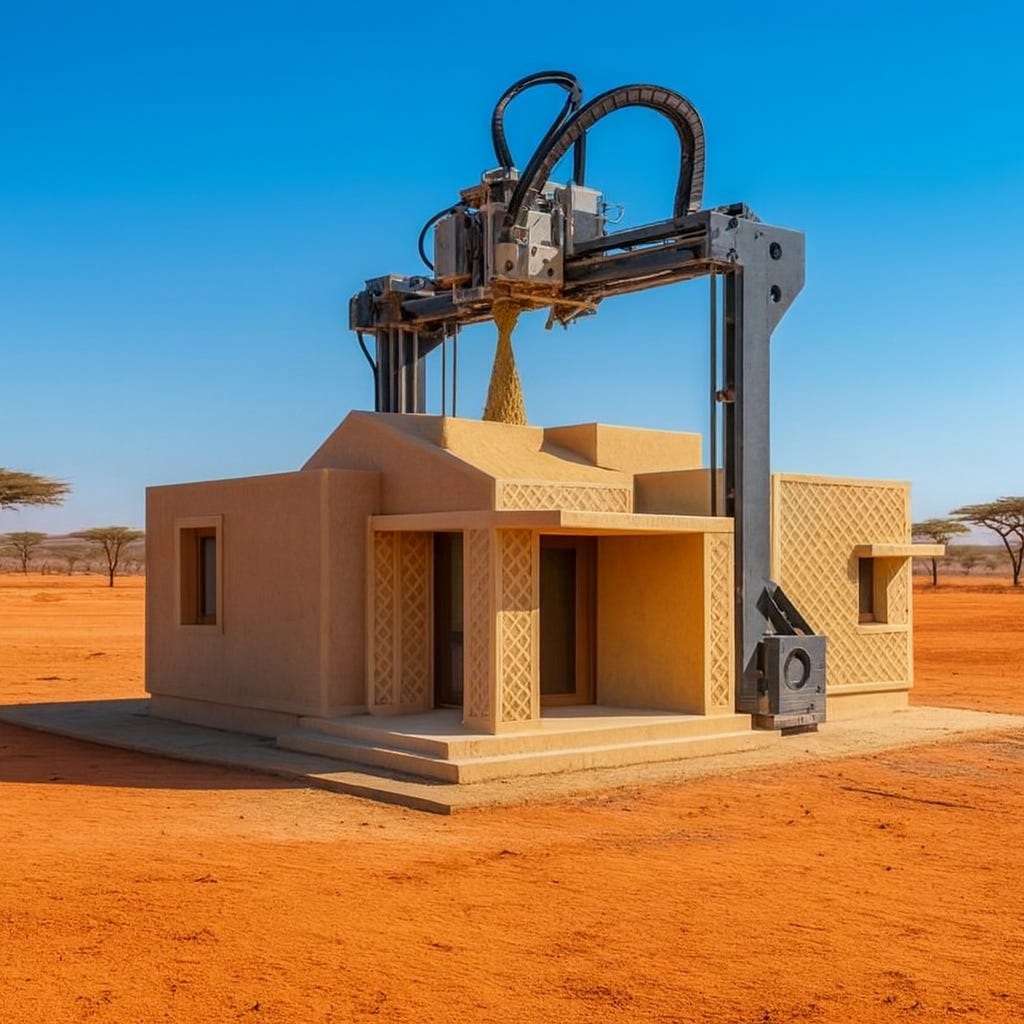
3D-printing in the construction industry shows Africa is not a passive recipient, but an active testbed.

BY CHERYL-ANNE SMITH[1]
Summary: Africa faces a severe housing shortfall due to rapid urbanisation. By 2030, the continent’s housing deficit is projected to increase from 53 million to 130 million housing units. As a result, alternative solutions are required to address this housing crisis, and 3D-printed houses stand out as one of the most promising innovative approaches. Early pilot projects across the continent already prove that 3D-printing can deliver homes in a faster, more affordable and sustainable manner than homes produced through traditional construction methods. Yet for 3D-printing technology in construction to achieve meaningful, continent-wide adoption, governance foundations such as modernised building regulations, supportive policy environments and strong institutions will need to be in place to achieve maximum impact.
Available for institutional reuse and purchase as a downloadable PDF at:

Traditional construction methods cannot meet the overwhelming demand for housing
Rapid population growth and urbanisation have caused a significant housing deficit of 53 million housing units needed across the African continent.[2]Each year, millions of people enter cities, creating an overwhelming demand for new communities, modern estates and sustainable residential developments than ever before.[3] Worsening the already dire situation, many housing development projects either never break ground or deliver fewer than the required number of housing units, while others have stalled.[4] As a result, the projected shortfall in housing units is set to increase from 53 million to 130 million by 2030.[5]
Consequently, Africa’s housing shortfall can also be attributed to conventional construction processes that are still subject to slow, manual labour practices, resulting in projects taking months or years to complete or being left abandoned altogether. These issues create additional delays and affect those in urgent need of housing.[6] Moreover, outdated building practices result in rising construction costs, driven by increased building material prices and significant levels of wastage, which push formal housing prices further beyond the reach of low-income households.[7]
Although strong policy frameworks exist, from affordable housing incentives, land-reform commitments, to infrastructure pledges and public-private partnership options to unlock large-scale housing developments, their impact is neutralised due to persistent administrative hurdles, fragmented implementation and slow execution.[8]At the same time, developers lack financing even though they have project pipelines; banks have capital but no de-risking structures; governments have frameworks but no unified housing delivery platform; and suppliers have materials but no visibility or coordination. Every actor is active, yet the ecosystem as a whole remains effectively gridlocked.[9]
All of these factors contribute to the rapid expansion of informal settlements, as many families continue to wait for government-subsidised houses. Addressing this housing shortfall requires alternative approaches, and 3D-printed houses stand out as one of the most promising innovative solutions.[10]

3D-printing in construction serves as an innovative solution to solving the housing shortfall
Additive manufacturing, better known as 3D-printing, is revolutionising the construction industry. Modern construction-grade 3D printers are being utilised to create 3D-printed houses. The technology consists of key components such as a pump, a gantry or robotic arm, Computer Aided Design (CAD), and slicing software, to guide the printing process. In housing applications, a cement-based mixture is inserted into the 3D-printer and pressed through a concrete extruder or nozzle under precise three-dimensional control. A computerised system controls the extruder to build the structure layer by layer.[11]
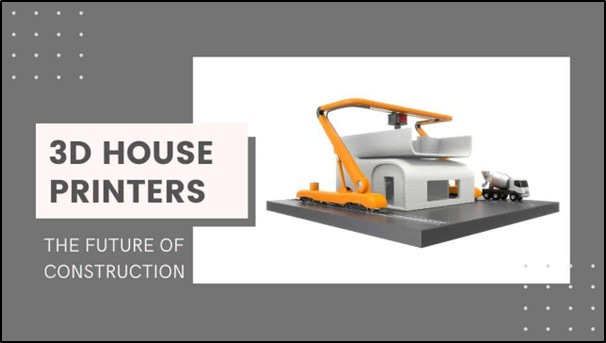
Image courtesy of Property Help[12]
3D-printing in the construction industry offers major benefits over traditional methods. By utilising this technology for housing, homes can be built at a faster pace in as little as 24 to 72 hours, depending on their size and design, whilst general construction expenses are reduced as fewer workers are required and wastage is minimised. In addition, a range of design features can be included to tailor homes and substantially improve living conditions, especially in informal settlements. This includes incorporating stronger insulation, improved safety elements and more reliable sanitation infrastructure.[13] The combination of these significant benefits, from rapid build times to affordability, and tailor-made design features, offers a powerful opportunity to accelerate housing delivery at scale, helping address Africa’s growing housing shortfall.[14]
The Process of Building a 3D-printed house
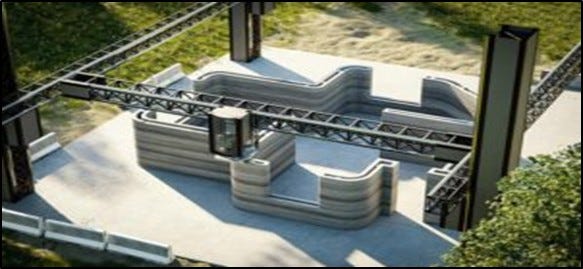
Image Courtesy of Designscape Architects[15]
By 2027, 3D-printing in construction is projected to reach US$40 billion. This new wave of manufacturing has seen more companies join the industry, especially to assist with building houses in developing areas.[16] At present, the Danish company COBOD International’s 3D construction printing machinery is the leading technology being utilised on the African continent.[17]
The rise of 3D-printed structures across Africa
Across the continent, early adopters are demonstrating what’s possible. These pilots show that Africa is not a passive recipient of global innovation; it is an active testbed shaping the future of construction.
A) Power2Build, Angola
Power2Build, an Angolan construction startup, is advancing local housing to solve the country’s housing deficit by using the COBOD BOD2, one of the world’s largest 3D construction printers. The company has built its biggest 3D-printed house yet, a 140 square metre residence featuring multiple bedrooms, bathrooms and living room spaces. This is Angola’s second 3D-printed house, following Power2Build’s first 53 square meter home. The printing time improved dramatically, as the first home took 48 hours, while the second, larger home was completed in just 30 hours.[18]
You can watch Power2Build in action here:
B) 14Trees, Malawi and Kenya
14Trees was founded in Africa in partnership with both Holcim and British International Investment. This company is transforming the construction industry in both Malawi and Kenya.[19] It built the world’s first 3D-printed school in Malawi’s Salima District, where the walls were printed in just 18 hours. Because of 3D-printing technology, 14Trees can now address the education infrastructure shortage in Malawi within a decade rather than within 70 years.[20]
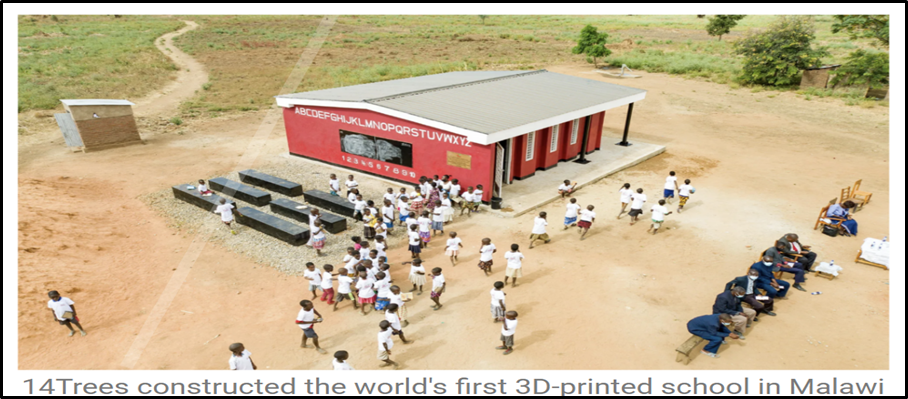
Image Courtesy of: AfricaLive.net[21]
Additionally, the company also delivered Kenya’s largest 3D housing project in Kilifi, producing 52 homes.[22] During this project, 14Trees used a single COBOD BOD2 printer[23] and Holcim’s Tector print material, showcasing scalable, sustainable construction, while also creating new skilled jobs by training local workers in advanced 3D-printing techniques.[24]
C) CyBe Construction and The University of Johannesburg, South Africa
In South Africa, the University of Johannesburg partnered with CyBe construction and worked in conjunction with the city government to build the country’s first 3D-printed house with the aim of utilising 3D-printing technology to address South Africa’s (SA) housing crisis. They produced a high-quality, cost-effective home in under 8 hours using the CyBe Robot Crawler, one of the fastest and most efficient 3D-printers globally. This achievement marks a major milestone for SA construction innovation and demonstrates the potential of advanced 3D- printing systems to deliver rapid, scalable housing solutions.[25]
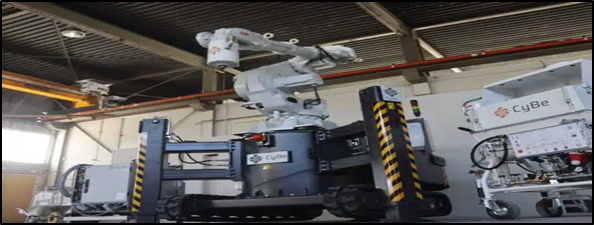
Image Courtesy of: CyBe Construction[26]
D) Be More 3D, Morocco
The company Be More 3D unveiled its 3D-printed house in Morocco in 2019, showcasing its achievement at the Solar Decathlon Africa event. The company printed a 32 square metre house in 12 hours with its BEM PRO 2 3D printer, developed with its partners, notably, Cemex, Acciona, and Sneider Electric, etc. The printer is also designed to withstand extreme heat and humidity and is easy to transport. As such, the 3D-printer is well-suited to build durable houses in both disadvantaged and conflict-affected regions.[27]
Widespread adoption of Africa’s 3D-printed houses depends on the governance systems surrounding them
The development of sustainable, low-cost housing through 3D-printing is no longer speculative; it is already being demonstrated across the continent. Yet scaling this innovation goes beyond the technology itself; governance, regulation and institutional readiness must evolve for the widespread adoption of 3D-printed housing to be realised.[28] 3D-printing in Africa remains constrained by outdated building codes, regulatory uncertainty, limited local technical skills, high upfront printer costs, financing models that have not adapted to new construction methods, and public scepticism about the durability and safety of 3D-printed houses.[29]
These challenges will have to be undertaken through coordinated policy reforms, strategic investment, and sustained capacity-building. Governments will be required to modernise building standards, integrate 3D-printing technologies into national housing strategies, and provide subsidies or leasing schemes that will enable small and medium-sized construction companies to participate. Moreover, local technical expertise will need to be developed in areas such as site preparation, printer operations and post-processing. Furthermore, domestic research and development will have to be incentivised to improve the quality of printing materials and performance. Additionally, long-term data on structural durability, climate resilience, and seismic behaviour will also be critical for regulatory approval and public trust.[30]
More importantly, real progress will depend on collaborative efforts with technology providers, governments, research institutions, and communities working together through public-private partnerships and structured pilot programmes; and only when the right governance frameworks are in place can 3D-printed housing become a transformative tool for addressing Africa’s housing deficit at scale.[31]
Build an enabling environment for Africa’s next housing frontier
3D-printing is already revolutionising the construction landscape. Early adopters of the technology in Africa, such as Power2Build in Angola, 14Trees in Malawi and Kenya, CyBe Construction in conjunction with the University of Johannesburg in South Africa, and Be More 3D in Morocco, have proven that rapid, sustainable, and affordable housing is not a futuristic aspiration but an emerging reality across the continent. Their projects show what is technologically possible. The next step is making it scalable. Widespread adoption of 3D- printed housing across the continent depends on the governance systems surrounding it, such as modernised building regulations, strong local technical expertise, adaptive financing models, targeted investments and robust public-private partnerships, etc. When regulatory frameworks have evolved, only then can 3D-printed construction shift from its experimental piloted phase to mainstream infrastructure to deliver affordable, resilient homes at the scale Africa urgently requires.
IF YOU VALUE THIS RESEARCH!!!! CLICK THE JAR BELOW!!!!!!

YOUR DONATIONS DIRECTLY SUPPORT INDEPENDENT THOUGHT LEADERSHIP, FUTURE RESEARCH, CONTENT CREATION, AND ADVOCACY UNDER THE POLICY SHIFTS PLATFORM. THANK YOU FOR YOUR SUPPORT!!!
[1] CHERYL-ANNE SMITH is the Founder of Policy Shifts. She has worked within the Information and Technology Services Industry, occupying positions in Strategic Intelligence and Management Consultancy. Her portfolio of work can be accessed via Linktree: https://linktr.ee/cheryl007 or LinkedIn: https://www.linkedin.com/in/cheryl-anne-smith-007796252/. Contact CHERYL-ANNE SMITH at annecheryl@proton.me
[2] “Solving Africa’s Housing Deficit,” Centre for Strategic and International Studies, May 22, 2025, https://www.csis.org/analysis/solving-africas-housing-deficit?utm_source=copilot.com
[3] “Unlocking Africa’s Housing Market: Why Development Stalls and the Structural Shift Needed to Scale,” Construct, January 9, 2026, https://cutstruct.com/blog/unlocking-africas-housing-market-why-development-stalls-and-the-structural-shift-needed-to-scale?utm_source=copilot.com; “Solving Africa’s Housing Deficit,” Centre for Strategic and International Studies, May 22, 2025, https://www.csis.org/analysis/solving-africas-housing-deficit?utm_source=copilot.com
[4] “Unlocking Africa’s Housing Market: Why Development Stalls and the Structural Shift Needed to Scale,” Construct, January, 9, 2026,https://cutstruct.com/blog/unlocking-africas-housing-market-why-development-stalls-and-the-structural-shift-needed-to-scale?utm_source=copilot.com
[5] “Solving Africa’s Housing Deficit,” Centre for Strategic and International Studies, May 22, 2025, https://www.csis.org/analysis/solving-africas-housing-deficit?utm_source=copilot.com
[6] Alireza Moghayedi, Jeffrey Mahachi, Refilwe Lediga, Tshepang Mosiea, Ephraim Phalafala, “Revolutionising affordable housing in Africa: A Comprehensive technical and sustainability study of 3D-printing technology,” Sustainable Cities and Society, Volume 105, June 2024, https://www.sciencedirect.com/science/article/pii/S2210670724001574#; Dennis Njena, “Modular Construction in Africa: 7 Key Ways It is Transforming Low-Cost Housing Projects,” Construction Frontier, https://constructionfrontier.com/modular-construction-in-africa-7-key-ways-it-is-transforming-low-cost-housing-projects/;“Unlocking Africa’s Housing Market: Why Development Stalls and the Structural Shift Needed to Scale,” Construct, January, 9, 2026, https://cutstruct.com/blog/unlocking-africas-housing-market-why-development-stalls-and-the-structural-shift-needed-to-scale?utm_source=copilot.com
[7] Dennis Njena, “Modular Construction in Africa: 7 Key Ways It is Transforming Low-Cost Housing Projects,” Construction Frontier,https://constructionfrontier.com/modular-construction-in-africa-7-key-ways-it-is-transforming-low-cost-housing-projects/; Ntebo Ngcobo, Douglas Aghimien, Opeoluwa Akinradewo, Refilwe Mokoena, “Challenges Facing the Use of Alternative Building Technologies for Housing Delivery in South Africa,” Construction Management and Quantity Surveying, 2024, https://pure.uj.ac.za/en/publications/challenges-facing-the-use-of-alternative-building-technologies-fo/#; Alireza Moghayedi, Jeffrey Mahachi, Refilwe Lediga, Tshepang Mosiea, Ephraim Phalafala, “Revolutionising affordable housing in Africa: A Comprehensive technical and sustainability study of 3D-printing technology,” Sustainable Cities and Society, Volume 105, June 2024, https://www.sciencedirect.com/science/article/pii/S2210670724001574#
[8] “Unlocking Africa’s Housing Market: Why Development Stalls and the Structural Shift Needed to Scale,” Construct, January 9, 2026, https://cutstruct.com/blog/unlocking-africas-housing-market-why-development-stalls-and-the-structural-shift-needed-to-scale?utm_source=copilot.com
[9] “Unlocking Africa’s Housing Market: Why Development Stalls and the Structural Shift Needed to Scale,” Construct, January 9, 2026, https://cutstruct.com/blog/unlocking-africas-housing-market-why-development-stalls-and-the-structural-shift-needed-to-scale?utm_source=copilot.com; “Solving Africa’s Housing Deficit,” Centre for Strategic and International Studies, May 22, 2025, https://www.csis.org/analysis/solving-africas-housing-deficit?utm_source=copilot.com
[10] “Can 3D-Printed Houses Solve Cape Town’s Housing Crisis,” Designscape Architects, June 18, 2025, https://dscape.co.za/can-3d-printed-houses-solve-cape-towns-housing-crisis/
[11] Alireza Moghayedi, Jeffrey Mahachi, Refilwe Lediga, Tshepang Mosiea, Ephraim Phalafala, “Revolutionising affordable housing in Africa: A Comprehensive technical and sustainability study of 3D-printing technology,” Sustainable Cities and Society, Volume 105, June 2024,https://www.sciencedirect.com/science/article/pii/S2210670724001574
[12] “3D House Printer-The Future of Construction,” Property Help, September 17, 2025, https://propertyhelp.uk/3d-house-printer-the-future-of-construction/
[13] “Can 3D-Printed Houses Solve Cape Town’s Housing Crisis,” Designscape Architects, June 18, 2025, https://dscape.co.za/can-3d-printed-houses-solve-cape-towns-housing-crisis/
[14] Alireza Moghayedi, Jeffrey Mahachi, Refilwe Lediga, Tshepang Mosiea, Ephraim Phalafala, “Revolutionising affordable housing in Africa: A Comprehensive technical and sustainability study of 3D-printing technology,” Sustainable Cities and Society, Volume 105, June 2024, https://www.sciencedirect.com/science/article/pii/S2210670724001574; “Can 3D-Printed Houses Solve Cape Town’s Housing Crisis,” Designscape Architects, June 18, 2025, https://dscape.co.za/can-3d-printed-houses-solve-cape-towns-housing-crisis/
[15] “Can 3D-Printed Houses Solve Cape Town’s Housing Crisis,” Designscape Architects, June 18, 2025,https://dscape.co.za/can-3d-printed-houses-solve-cape-towns-housing-crisis/
[16] Carlota V, “ Be More 3D launched the construction of the first 3D printed house in Africa,” 3D Natives, October 11, 2019, https://www.3dnatives.com/en/be-more-3d-first-3d-printed-house-africa-111020194/#
[17] “Largest 3D Printed Building In Africa,” COBOD, June 20, 2022, https://cobod.com/largest-3d-printed-building-in-africa/
[18] Antonia Pineiro, “Angola Introduces Large-Scale Concrete 3D-Printing to Address Housing Crisis,” Arch Daily, July 24, 2025, https://www.archdaily.com/1028822/angola-introduces-large-scale-concrete-3d-printing-to-address-housing-crisis; “Largest 3D Printed Building In Africa,” COBOD, June 20, 2022, https://cobod.com/largest-3d-printed-building-in-africa/
[19] “3D-Printing of Houses,” Taito 3D, https://www.taito3d.co.za/blogs/3d-printing-of-houses.html; “Behind the world’s first 3D-printed school in Malawi,” AfricaLive, August 10, 2024, https://africalive.net/article/behind-the-worlds-first-3d-printed-school-in-malawi/
[20] “Behind the world’s first 3D-printed school in Malawi,” AfricaLive, August 10, 2024, https://africalive.net/article/behind-the-worlds-first-3d-printed-school-in-malawi/
[21] Ibid.
[22] Ibid.
[23] “10 Houses 3D Printed In 10 Weeks On The Largest 3D Printing Project Site to Date,” COBOD, February 16, 2023, https://cobod.com/10-houses-3d-printed-in-10-weeks-on-the-largest-3d-printing-project-site/
[24] “Behind the world’s first 3D-printed school in Malawi,” AfricaLive, August 10, 2024, https://africalive.net/article/behind-the-worlds-first-3d-printed-school-in-malawi/
[25] “3D-Printing of Houses,” Taito 3D,https://www.taito3d.co.za/blogs/3d-printing-of-houses.html; “UJ House,” CyBe, 2022, https://cybe.eu/cases/uj-house/
[26] “UJ House,” CyBe, 2022, https://cybe.eu/cases/uj-house/
[27] Carlota V, “ Be More 3D launched the construction of the first 3D printed house in Africa,” 3D Natives, October 11, 2019, https://www.3dnatives.com/en/be-more-3d-first-3d-printed-house-africa-111020194/#!
[28] Cristus Cleetus, “3D-Printed Sustainable Housing: A Revolutionary Solution for Global Housing Needs,” The Sustainable Times, August 30, 2024, https://thesustainabletimes.com/economy-business-practices/sustainable-business-practices/3d-printed-sustainable-housing-a-revolutionary-solution-for-global-housing-needs/?utm_source=copilot.com; “Behind the world’s first 3D-printed school in Malawi,” AfricaLive, August 10, 2024, https://africalive.net/article/behind-the-worlds-first-3d-printed-school-in-malawi/
[29] “South Africa 3D Printing Construction Market Size and Forecasts 2031,” Mobility Foresights, July 31, 2025, https://mobilityforesights.com/product/south-africa-3d-printing-construction-market?utm_source=copilot.com; Roelof van den Burg, “3D Printing and other construction methods to fast track SA’s public housing plan,” Construction World, June 5, 2025, https://www.crown.co.za/construction-world/marketplace/32880-3d-printing-and-other-construction-methods-to-fast-track-sa-s-public-housing-plans?utm_source=copilot.com
[30] “South Africa 3D Printing Construction Market Size and Forecasts 2031,” Mobility Foresights, July 31, 2025,https://mobilityforesights.com/product/south-africa-3d-printing-construction-market?utm_source=copilot.com
[31] Roelof van den Burg, “3D Printing and other construction methods to fast track SA’s public housing plan,” Construction World, June 5, 2025, https://www.crown.co.za/construction-world/marketplace/32880-3d-printing-and-other-construction-methods-to-fast-track-sa-s-public-housing-plans?utm_source=copilot.com
Get more from Policy Shifts on Patreon https://www.patreon.com/c/PolicyShifts. Reach out to Cheryl-Anne via the contact form here: https://docs.google.com/forms/d/e/1FAIpQLSdCAJxOvw3fHj0jVmJYIDIkcicQoMF8vEumfK0YR9YmUybl2w/viewform?edit_requested=true
For information about sponsoring a Policy Shifts Post, click the link: https://www.patreon.com/posts/sponsor-policy-146905596